
01
The AI Power Race: Western Deficit vs. Chinese Surplus
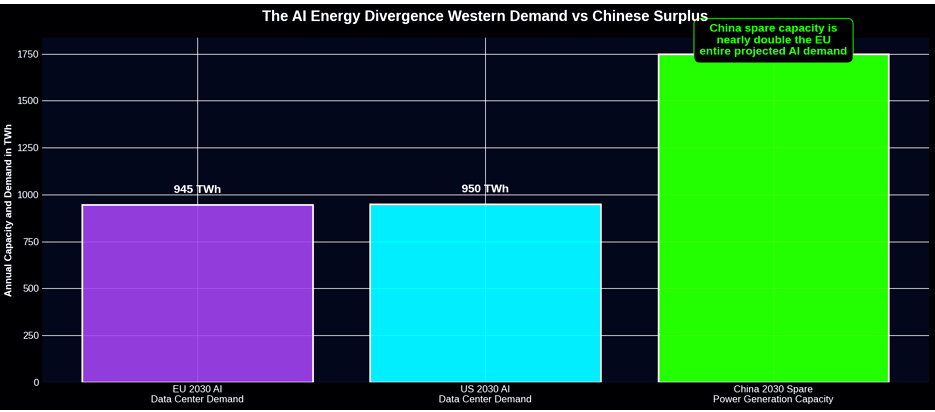
The expansion of artificial intelligence is increasingly constrained by electricity supply. By 2030, projected data center power demand will reach 950 TWh in the US and 945 TWh in the EU, creating structural bottlenecks and multi-year grid queues.
China enters the race from a position of surplus: its projected spare generation capacity of 1,750 TWh is nearly double the EU's entire AI energy needs.
Abundant power infrastructure could provide Chinese tech firms with a major strategic advantage as energy availability dictates AI scaling.
02
Small Modular Reactors (SMRs)vs. AI Power Demand
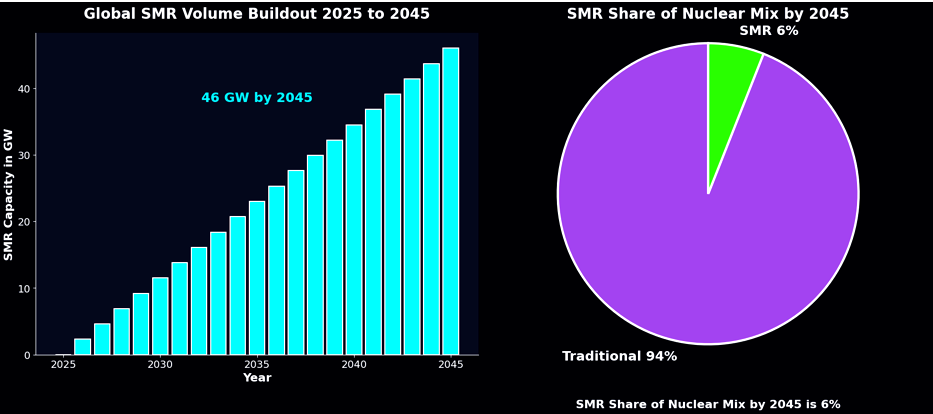
Traditional nuclear plants take years to permit and build, shifting market focus toward small modular reactors (SMRs). Global SMR capacity is projected to reach approximately 46 GW by 2045.
However, a single next-generation AI campus can require 1–2 GW of continuous baseload power. Even the entire forecasted global buildout of SMRs would power only a few dozen campuses of that scale.
While SMRs represent a promising solution for dedicated clean power, they alone may not be enough to satisfy the broader energy constraints facing AI scaling.
03
The TRISO Bottleneck: Fuel Constraints for Advanced SMRs
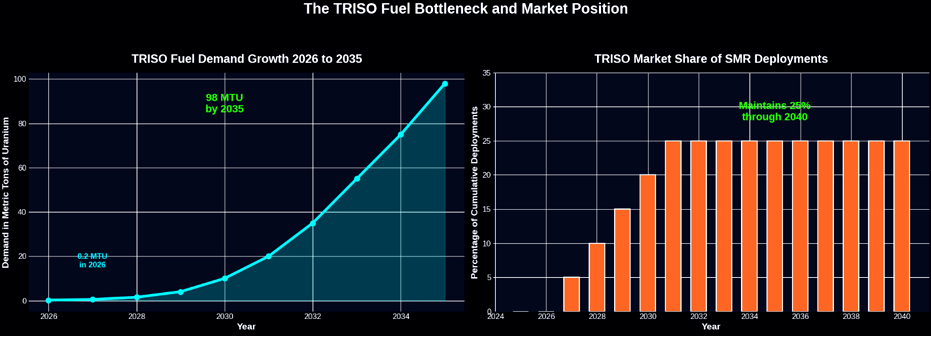
Many advanced small modular reactors (SMRs) rely on specialized TRISO fuel, where uranium particles are encased in ultra-durable protective layers. SMR designs utilizing TRISO are projected to capture 25% of all cumulative deployments through 2040.
Demand for TRISO is forecasted to surge from 0.2 metric tons of uranium in 2026 to 98 MTU by 2035. However, licensing and scaling certified fabrication facilities take years and cannot simply be fast-tracked with extra capital.
04
The HALEU Supply Gap: Fuel Bottleneck for Next-Gen Nuclear
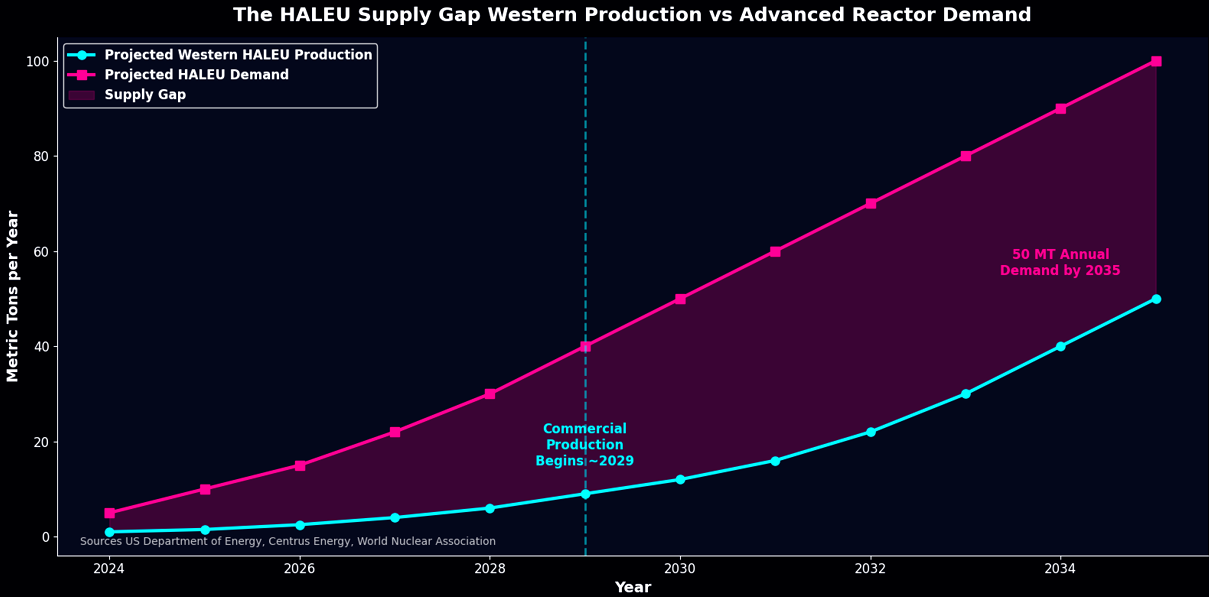
Advanced nuclear reactors require High-Assay Low-Enriched Uranium (HALEU), enriched to 5–20% compared to 3–5% for conventional reactors.
Annual demand for HALEU is projected to reach 100 metric tons by 2035, while Western commercial production will only begin around 2029 and reach ~50 MT, creating a structural 50 MT annual deficit. Scaling capacity requires specialized centrifuges and strict licensing.
The key mismatch remains: AI power demand scales at tech speed, while nuclear fuel infrastructure moves on a regulatory timeline.
05
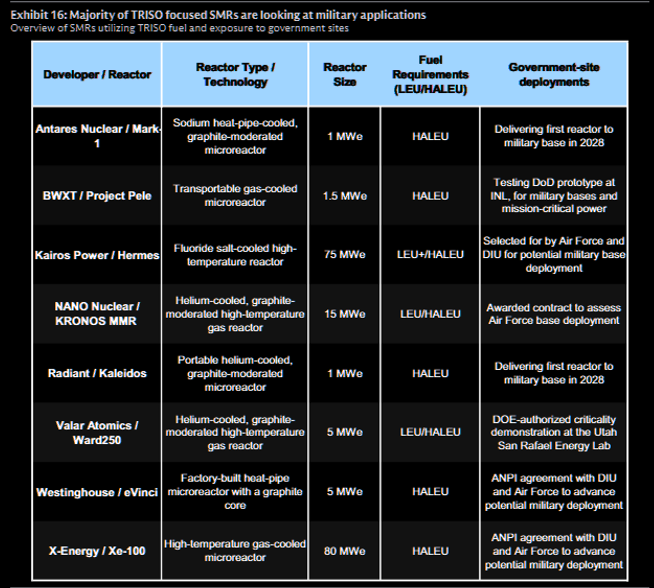
Government and Military Projects Take Priority in HALEU Supply
The majority of small modular reactors using TRISO fuel are targeting US defense and government installations. The US Department of Energy (DOE) and Department of Defense are already allocating scarce HALEU supplies to priority state projects.
This dynamic creates a two-tier market: authorized government contractors secure early fuel allocations and regulatory clearances, while commercial developers and AI data centers face long supply delays.
In next-gen nuclear, the primary competitive advantage is no longer just capital, but regulatory qualification and secured fuel access.
06
Nuclear Fuel Cycle: Shifting Leadership in the Uranium Trade
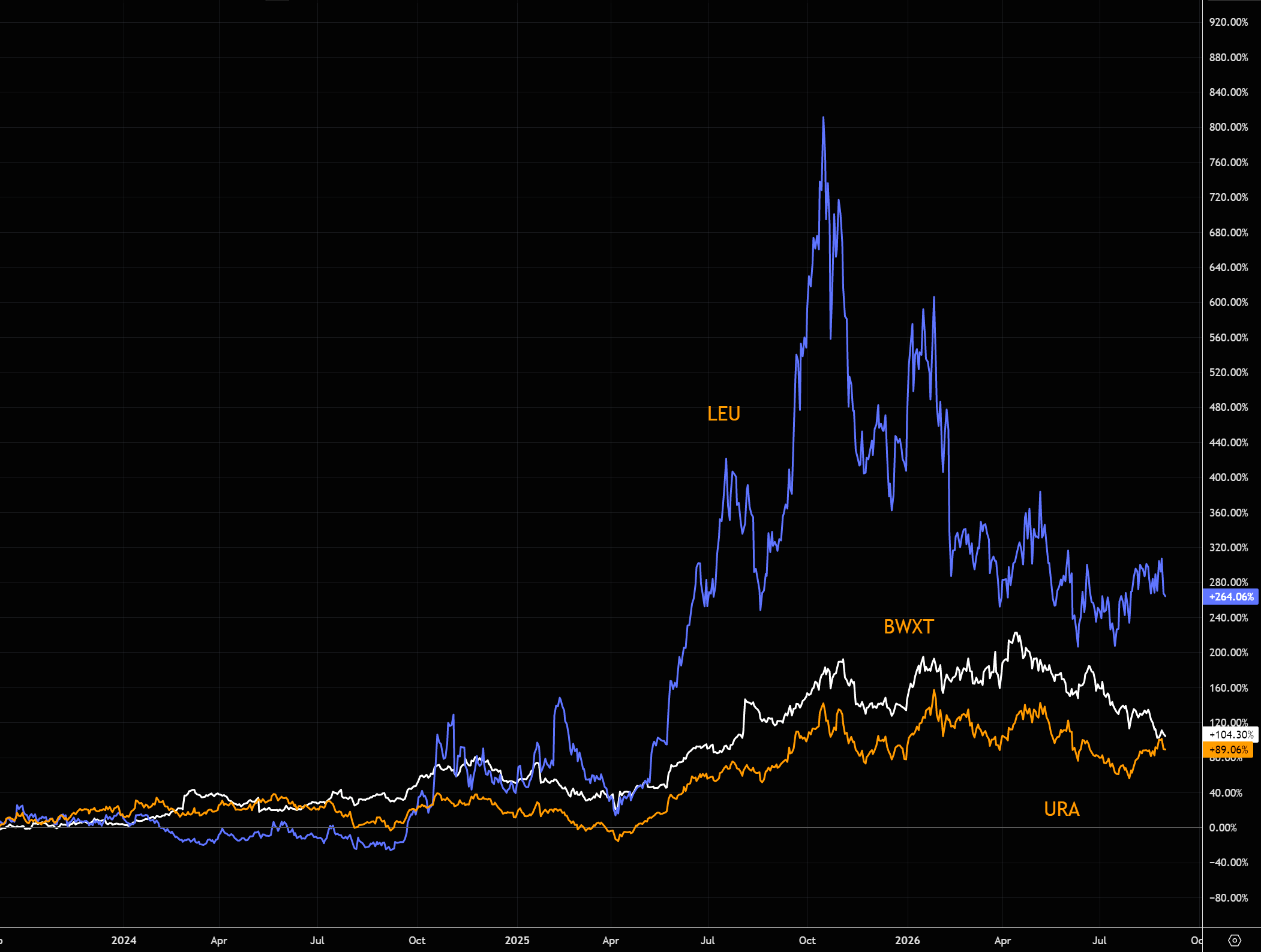
Driven by excitement around uranium enrichment and HALEU fuel, Centrus Energy (LEU) surged +264% over three years, vastly outperforming the broader uranium market. Over the past year, however, broad uranium equities (URA, +89%) and component supplier BWXT (+104%) regained relative strength.
As volatile spikes in pure enrichment plays cooled, broad mining assets provided steadier performance.
If AI-driven power demand accelerates the rollout of advanced reactors, investor capital may rotate back downstream toward specialized enrichment and fuel fabrication.
07
Uranium Miners ETF
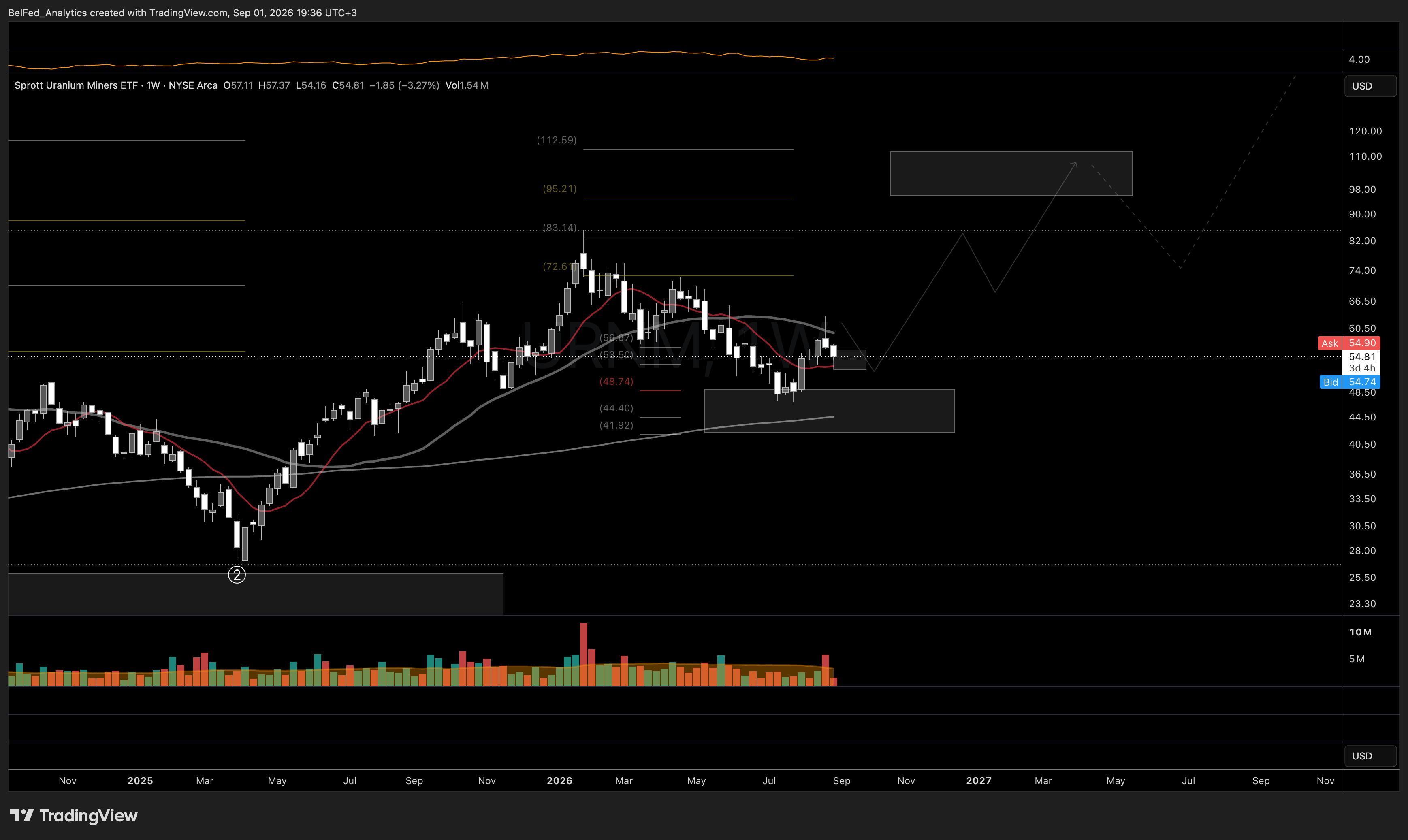
From a tactical investing and trading standpoint, we continue to monitor the trend structure across the uranium miners ETF ($URNM).
Following our macro sector overview last week, the primary focus is whether the price can hold within the $50–$52 range. Staying firmly above the $50 mark followed by steady accumulation would create an attractive setup for medium- and long-term positioning.
We are also keeping a close eye on Centrus Energy (LEU) and BWXT: both sit at the heart of the uranium enrichment story, and both stocks carry strong macro potential. We will track their charts and alert our members as soon as we spot attractive entry points.
We will alert our members as soon as early bottoming signals appear and balanced risk-reward entry points emerge.
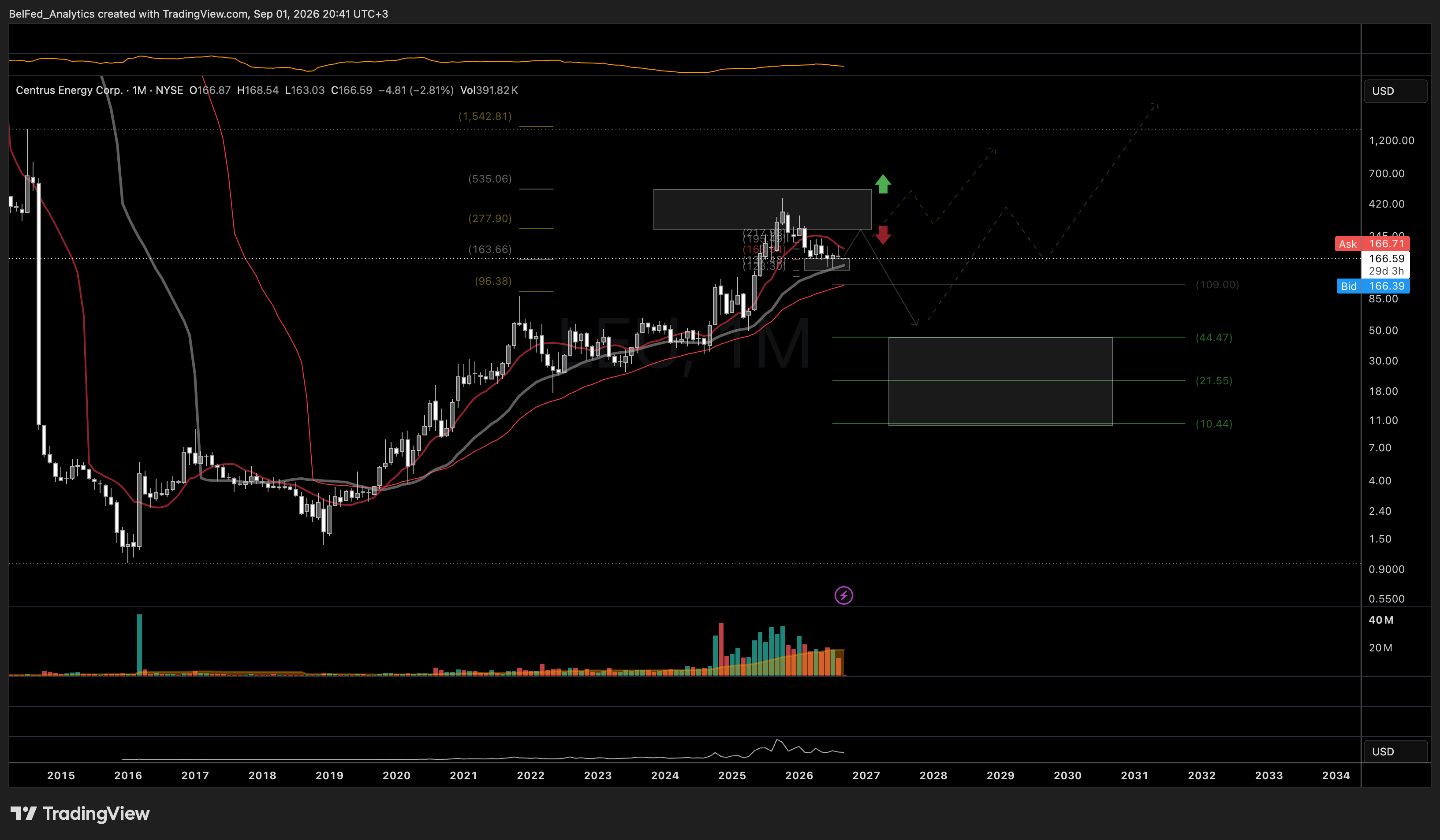
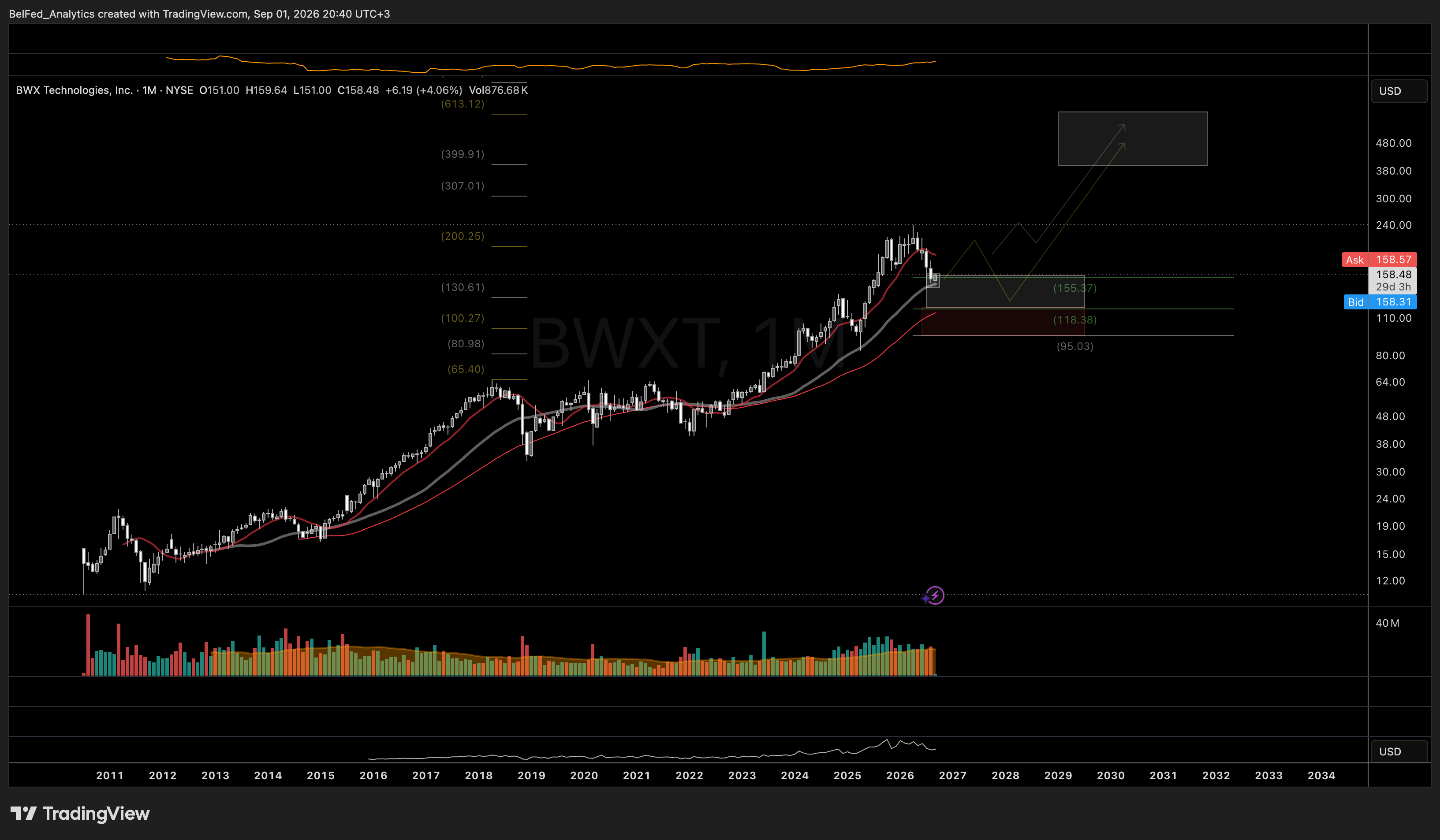
We've already mapped entries on the tickers in this report.
Levels, stops, and targets live inside the members area and Telegram, pushed the moment a setup triggers. Start a 14-day trial and get access before we open the first position in this theme. No card required.